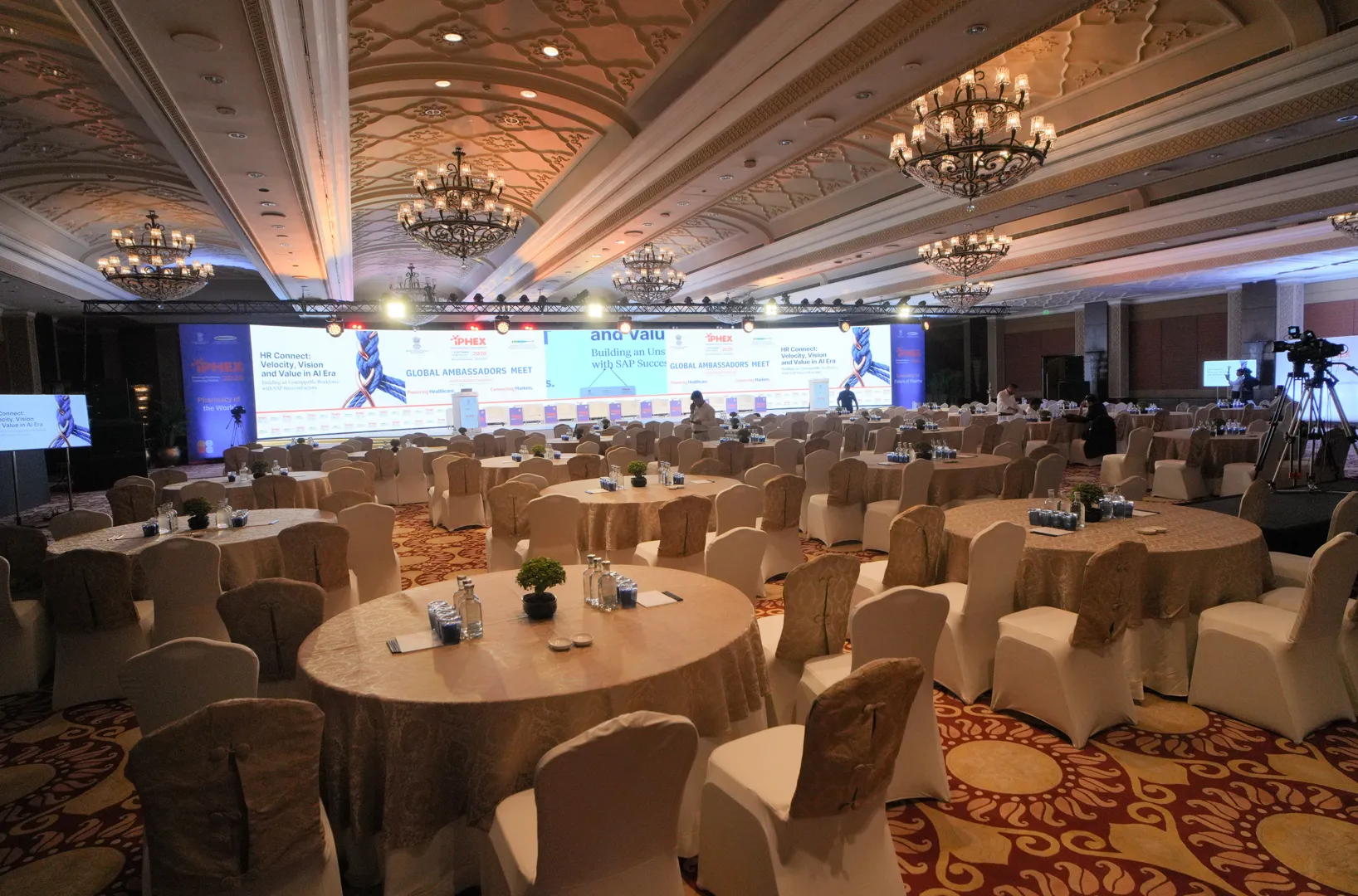
Phase one: pre event
This is where eighty percent of the outcome is decided. Work through these items in order and sign off each one before moving on.
- Define the objective, delegate count, and success measures
- Approve the budget with a contingency line
- Book the date, venue, and room block
- Build the agenda and confirm speakers in writing
- Appoint sound, light, LED, catering, and print vendors
- Approve branding, signage, and stage design
- Open registration and start tracking confirmations
- Plan travel, airport pickups, and hotel allocation
- Prepare the run sheet and share it with every vendor
Phase two: event day
Event day is execution, not decision making. If a decision is being taken on the morning of the event, something was missed earlier.
- Complete setup and technical checks before delegates arrive
- Open the registration desk at least sixty minutes early
- Brief the protocol team on VIP arrival and seating
- Keep a control point with the run sheet, microphones, and spares
- Manage stage transitions with a dedicated backstage coordinator
- Monitor food service timings against session breaks
- Capture photography and video against a shot list
- Keep a written log of anything that goes wrong
Phase three: post event
The last phase is the one most teams skip, and it is the one that compounds value across future events.
- Supervise teardown and confirm venue handover
- Collect and file all vendor invoices
- Reconcile actual spend against budget
- Share thank you notes and speaker certificates
- Deliver the photo and video gallery to stakeholders
- Collect delegate feedback while it is fresh
- Write a short report with attendance, spend, and lessons
Use one master document
Checklists fail when they live in five different files. Keep one master sheet with owners and deadlines against every line, and make it the only version anyone works from.
Assign a single name to each task. Tasks owned by a team are tasks owned by nobody.